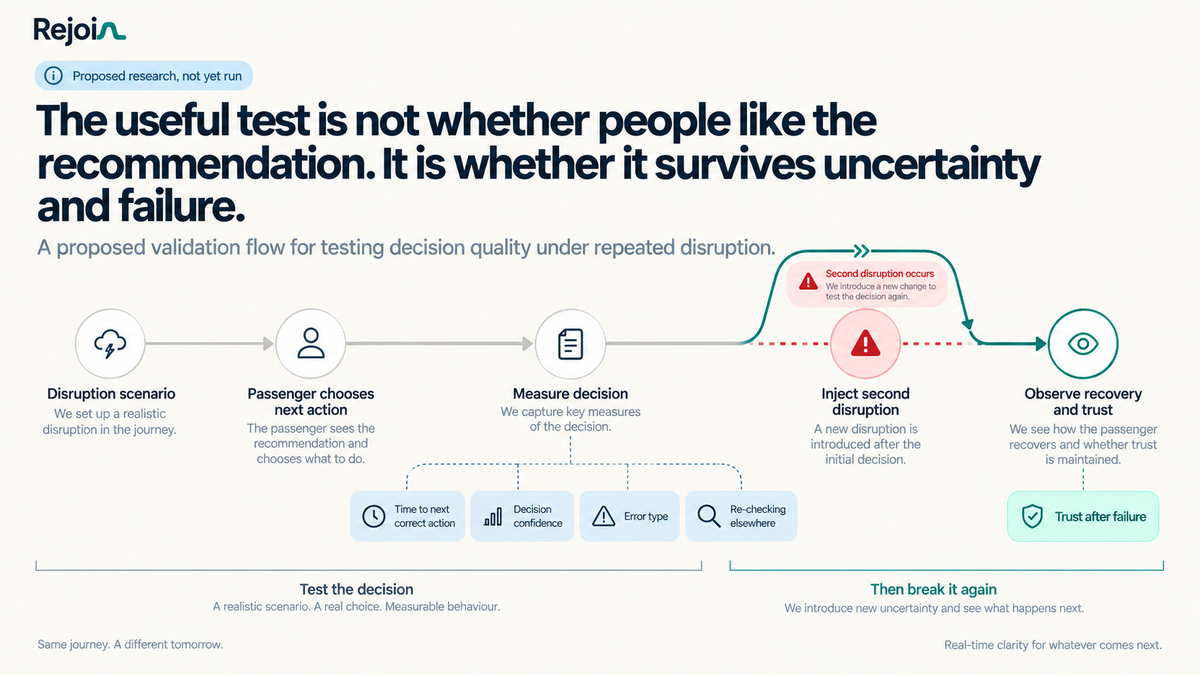
When the timetable stops being the plan, Rejoin gives one next correct action.
A cancellation changes the passenger's job from travelling to recovering. Rejoin brings service status, ticket rules, access needs and connection risk together before recommending what to do next.
- Project
- Freelance engagement
- Role
- Lead UX Designer
- Testing
- Autonomous usability testing with AI-assisted analysis

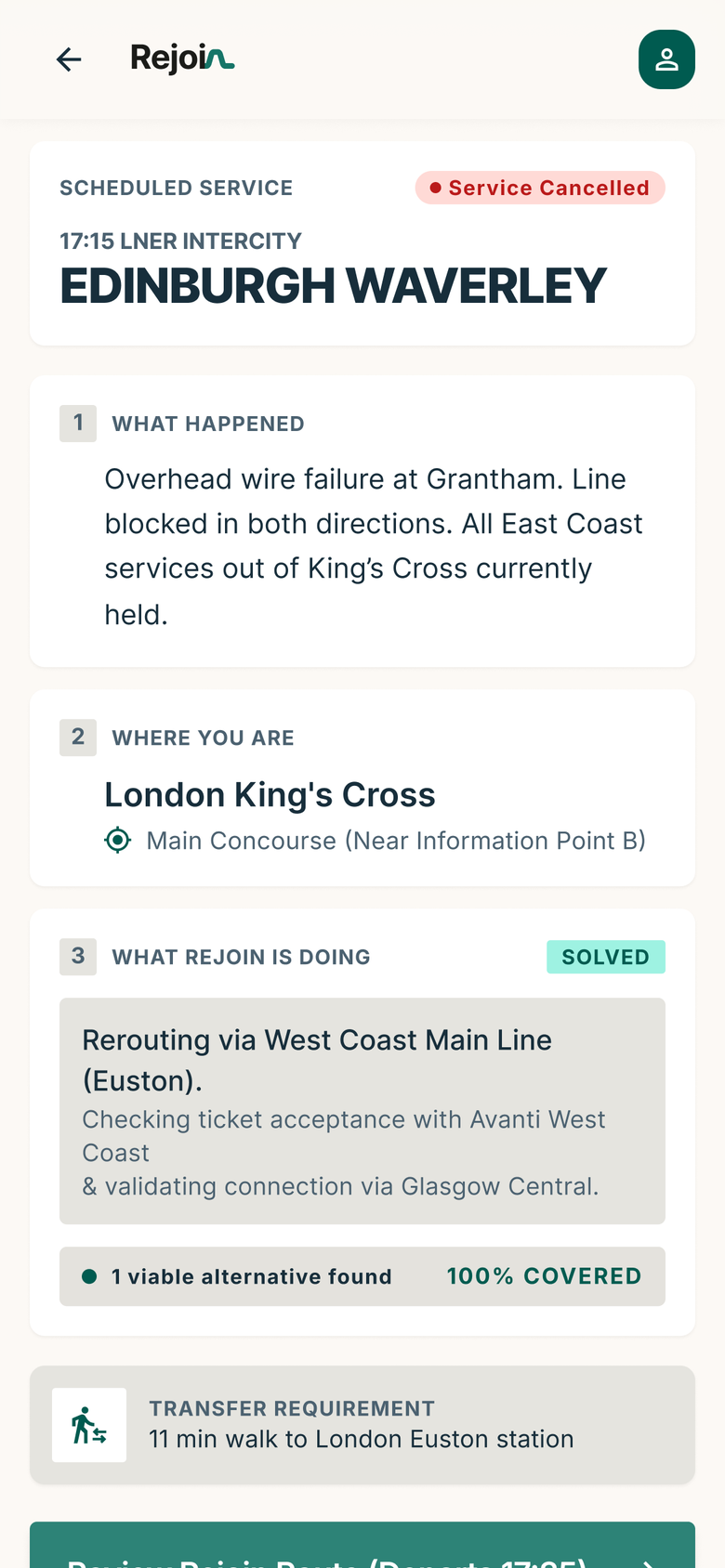
Disruption creates a different product job.
Planning tools help people search, compare, buy and travel. Once the plan breaks, the immediate need is to detect what changed, understand the consequence and commit to a viable recovery.
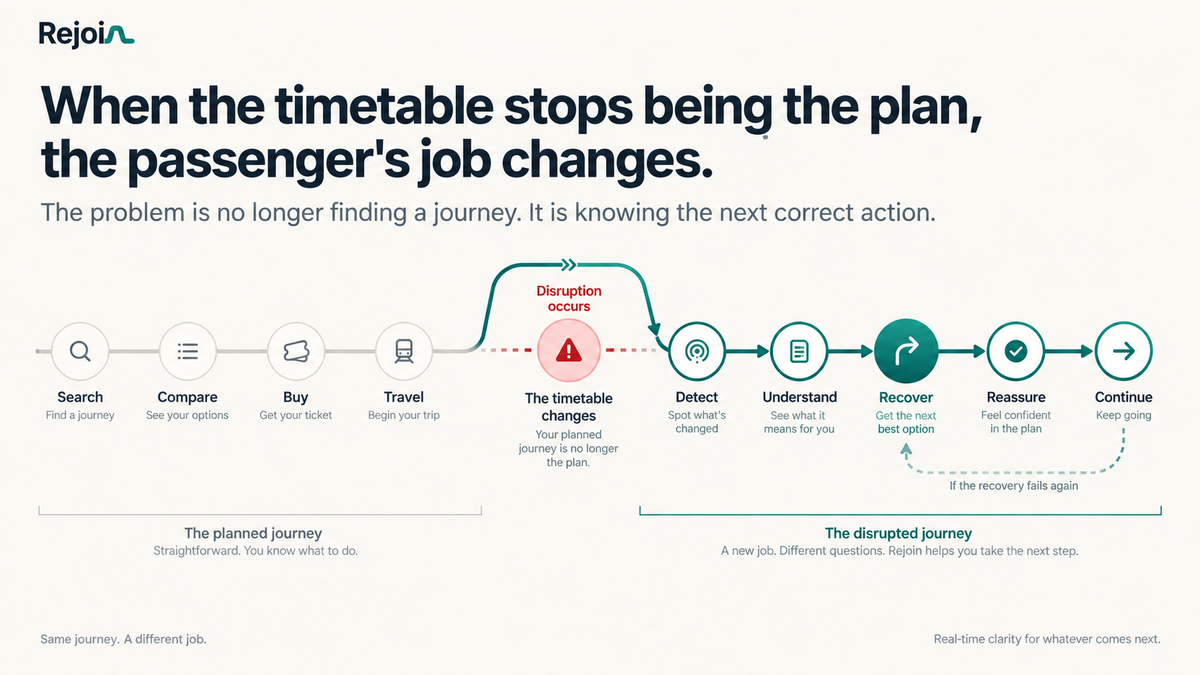
The passenger is not choosing between trains. They are resolving ticket validity, access, connection risk and the last viable route home.
Those facts often sit across different products and organisations. The pressure comes from having to connect them quickly, in the right order, while already in motion.
The information existed. The service gap was connecting it around one passenger.
Rejoin is not another journey planner. It assembles network truth, the journey already bought and the passenger's constraints, then translates them into one defensible action.
Do not return a list and call it help.
A ranked list still leaves the hardest work with somebody on a concourse. Rejoin checks whether a route is viable first, then gives one recommendation with the reasons in the main path.
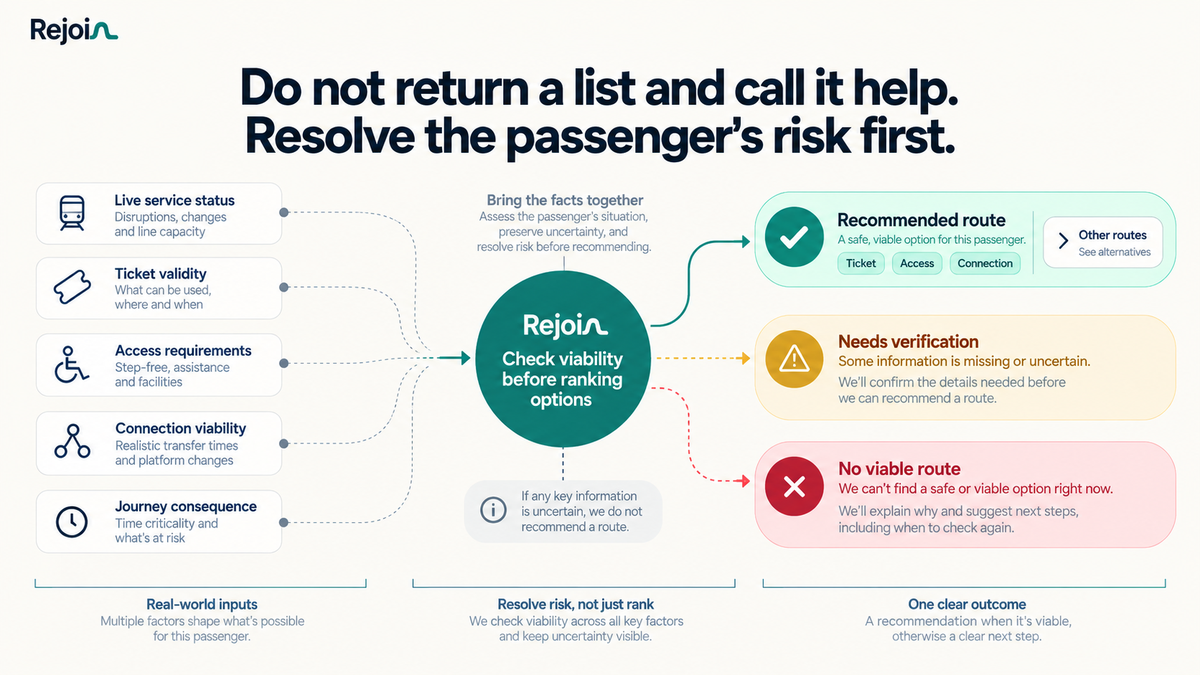
The recommendation answers five questions before it asks for action.
- 01
Is it running? Check live service and downstream disruption.
- 02
Is the ticket accepted? Resolve operator and restriction rules.
- 03
Can this passenger use it? Treat step-free access as a blocking condition.
- 04
Can they make the connection? Include walking and platform-change time.
- 05
What happens if it fails? Prefer a route with a recoverable consequence.
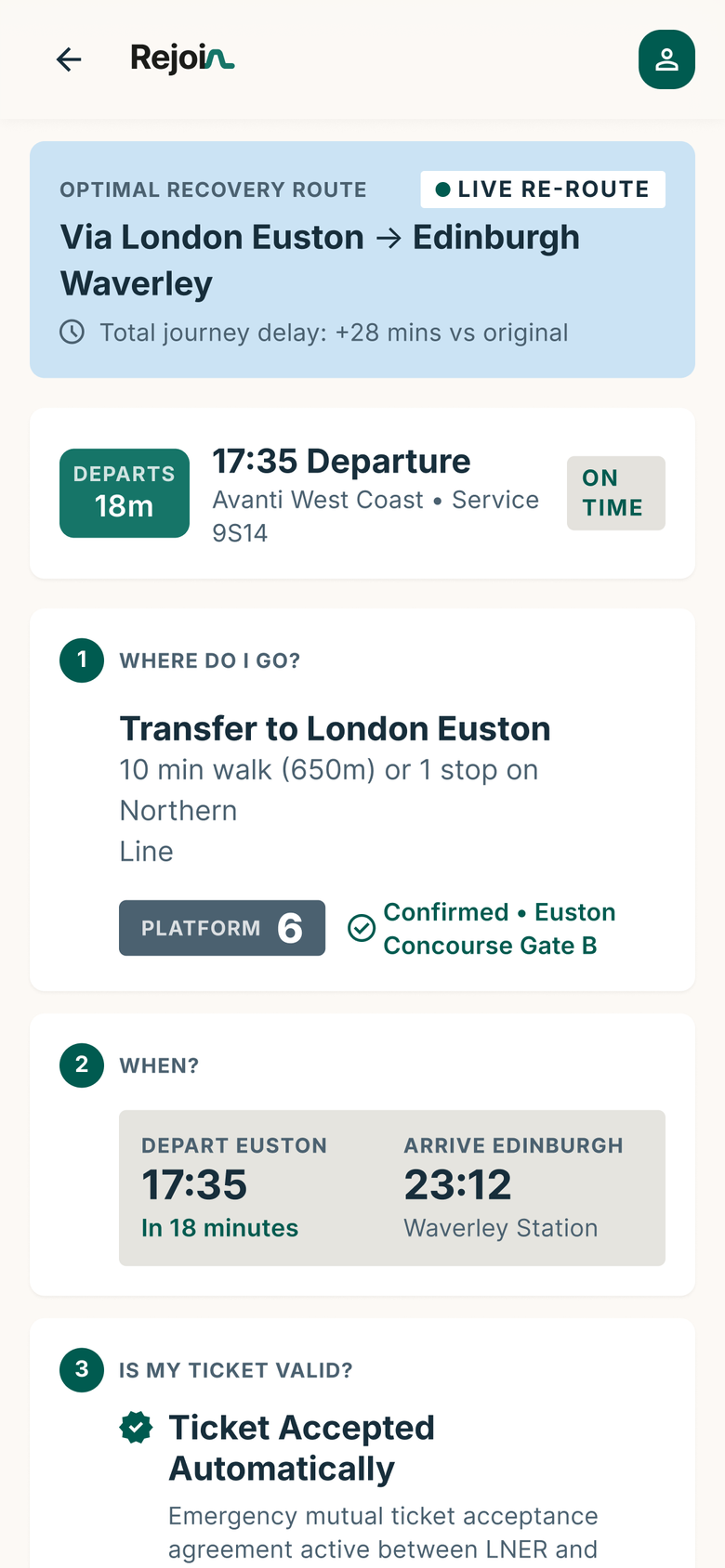
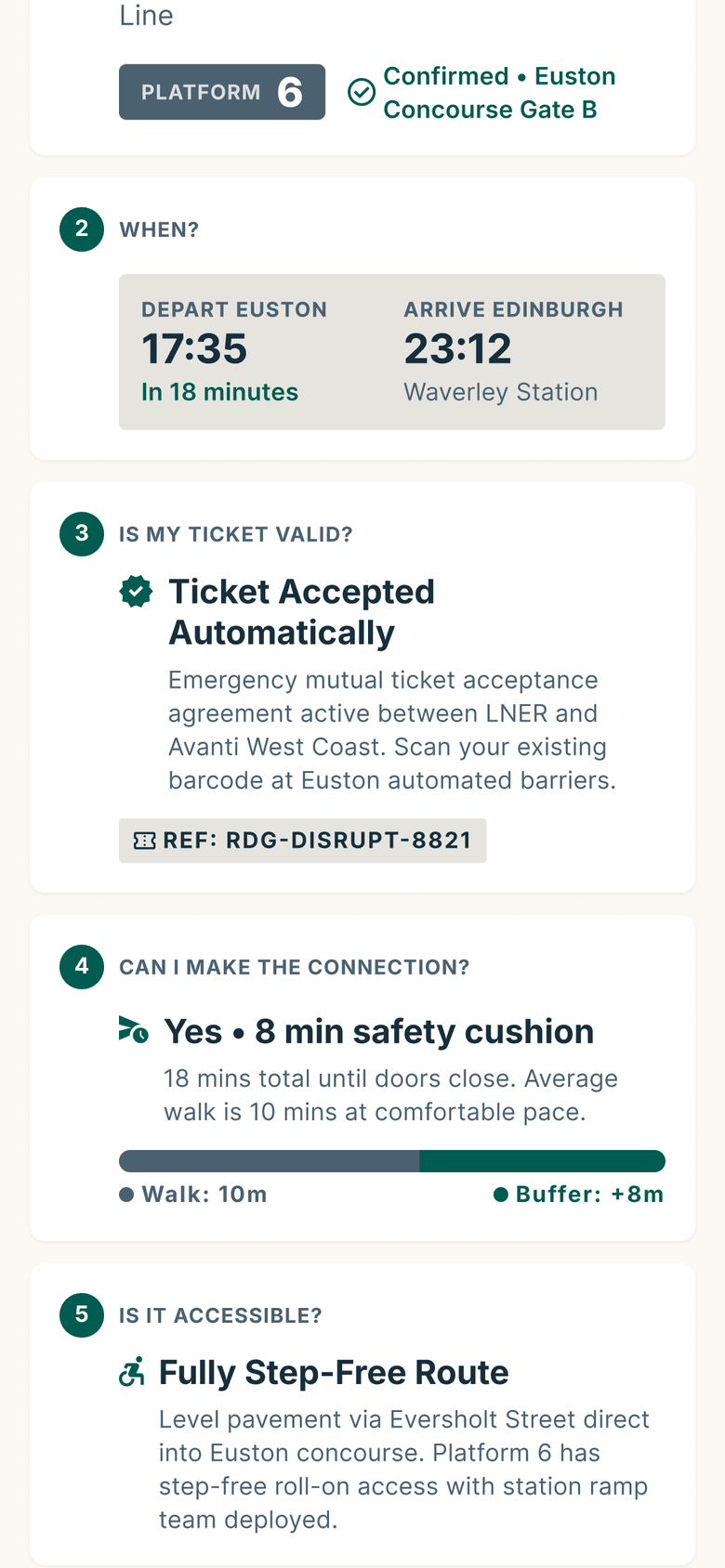
Recovery is a state the journey can enter more than once.
The interface changes with the passenger's job. Normal journey guidance gives way to an explanation of what happened, a checked recovery route and reassurance as the new plan progresses.
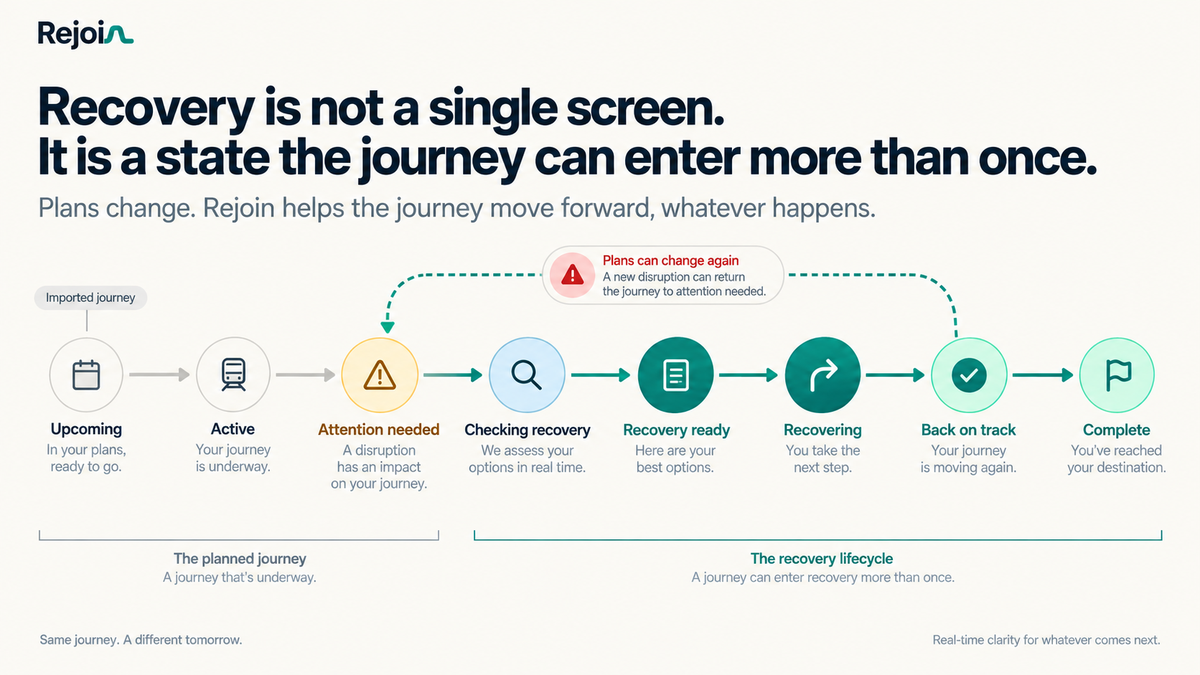
The interface stops behaving like a timetable when the timetable stops being useful.
Before disruption, Rejoin supports the physical journey with platform, seat and wayfinding detail. After cancellation, the priority becomes explanation and a clear holding action while the service checks a recovery route.
The transition is deliberate: say what changed, show what is being resolved and only then ask the passenger to commit.
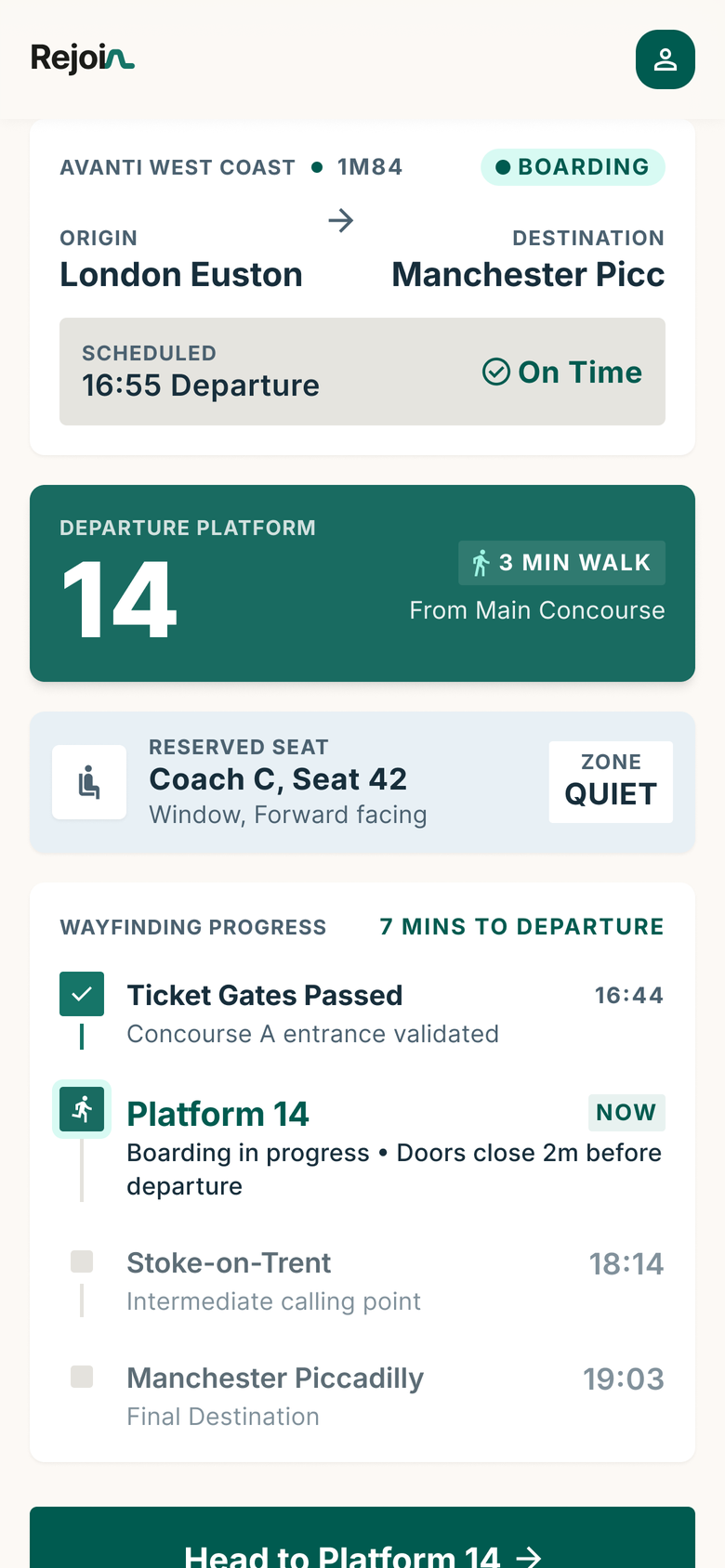
The value is continuity, not another journey planner.
Rejoin carries the decision beyond the alternative train. It records what actually happened, preserves the evidence and makes compensation or later review part of the same journey history.
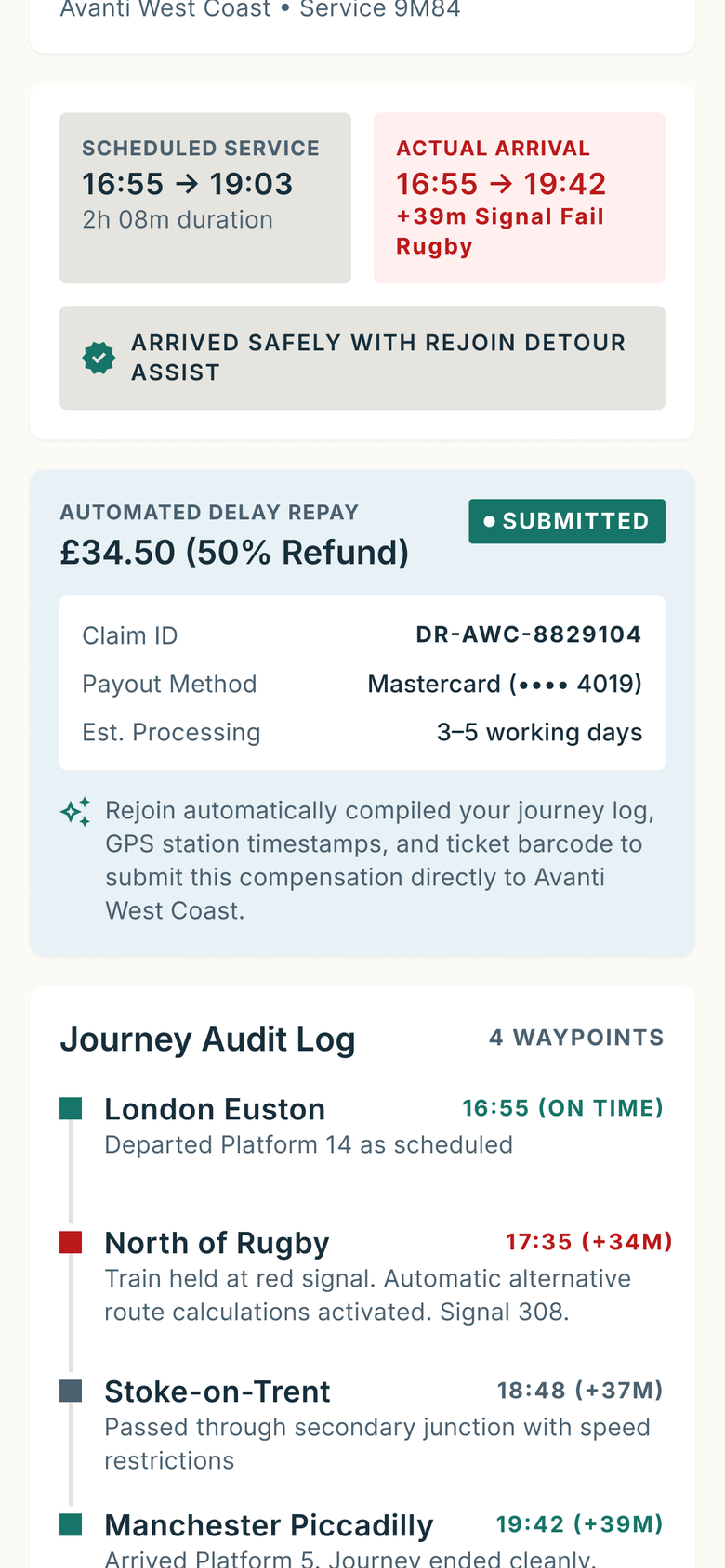
A recovery service should remember the consequence of its own recommendation.
That creates a continuous record from the moment the plan failed to the eventual arrival. The passenger does not have to reconstruct the disruption later across tickets, emails and operator websites.
- During disruption
- One viable next action with reasons and a fallback.
- While recovering
- Updated guidance if the new plan changes again.
- After arrival
- Actual journey evidence, claim status and an audit trail.
These screens communicate the designed outcome with illustrative data. They do not represent a launched service or measured impact.
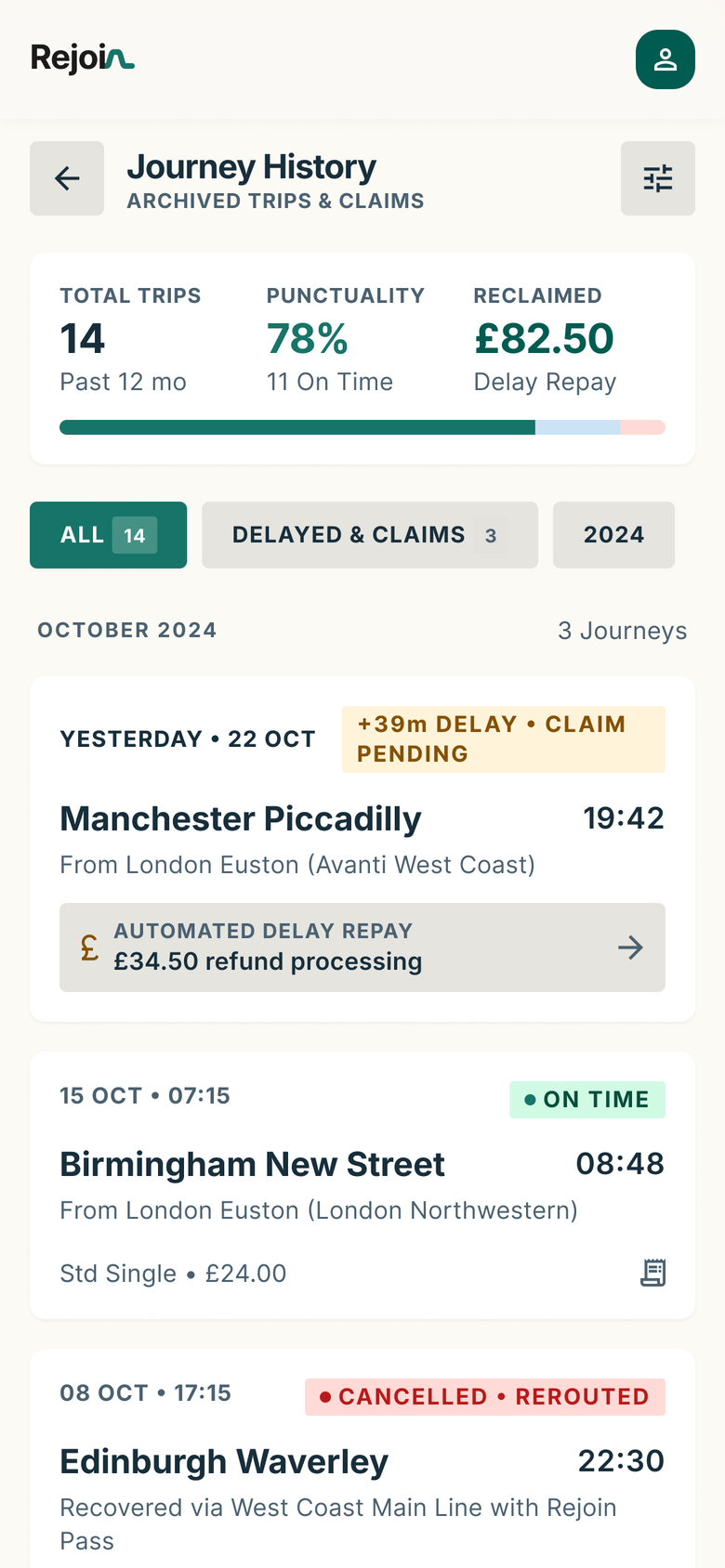
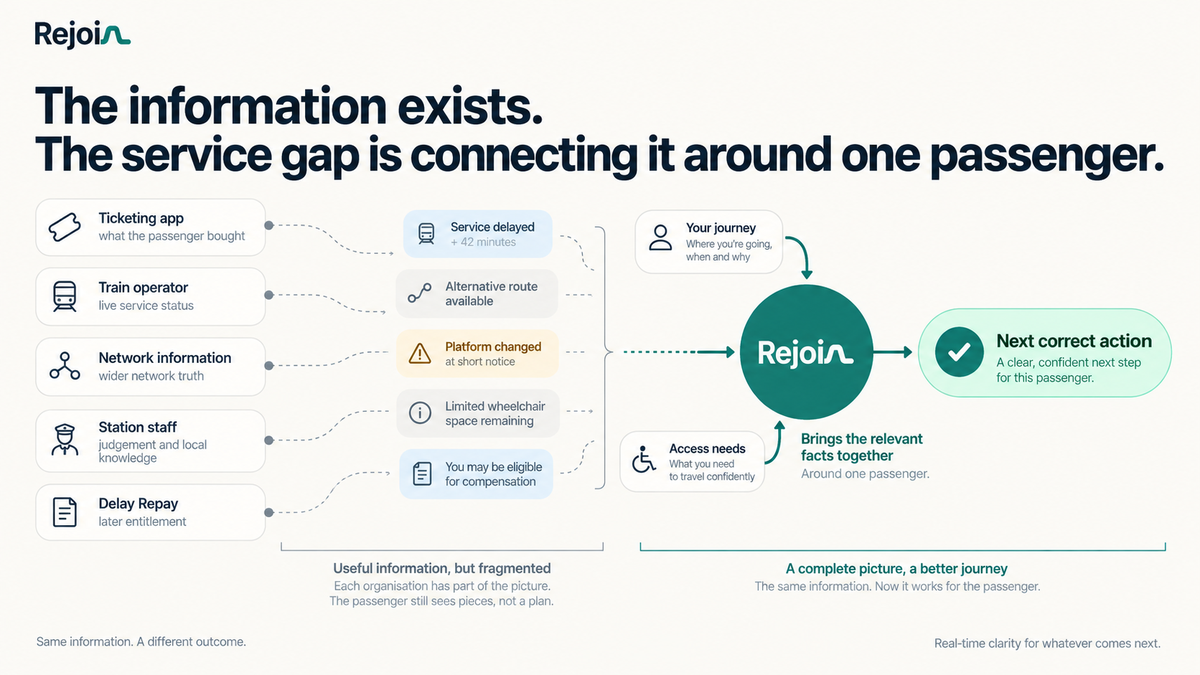
Test the decision, then break it again.
AI helped accelerate usability testing. Autonomous, scenario-based runs exercised the recovery flow, including a second disruption, then AI supported the analysis and synthesis of recurring issues and insights.
- Time to the next correct action
- Ticket, access and connection errors
- Confidence at the moment of commitment
- Trust after an injected second disruption