
Different features could explain confidence, uncertainty and sources in different ways.
Darwin
I helped turn scattered AI activity into a capability Darwin could scale.
The work connected product strategy, experience language, governance, reusable components and AI-enabled ways of working. It made AI clearer in the product and more practical for the designers shaping it.
- Scope
- Product, practice and platform
- Contribution
- Strategy through to interaction detail
- Scale
- Four years of capability building
AI was arriving everywhere. The risk was that every team invented it again.
Chat, summaries, search, research and prototyping were all useful. Without a common system, they also created inconsistent language, duplicated patterns, uneven confidence handling and unclear ownership.
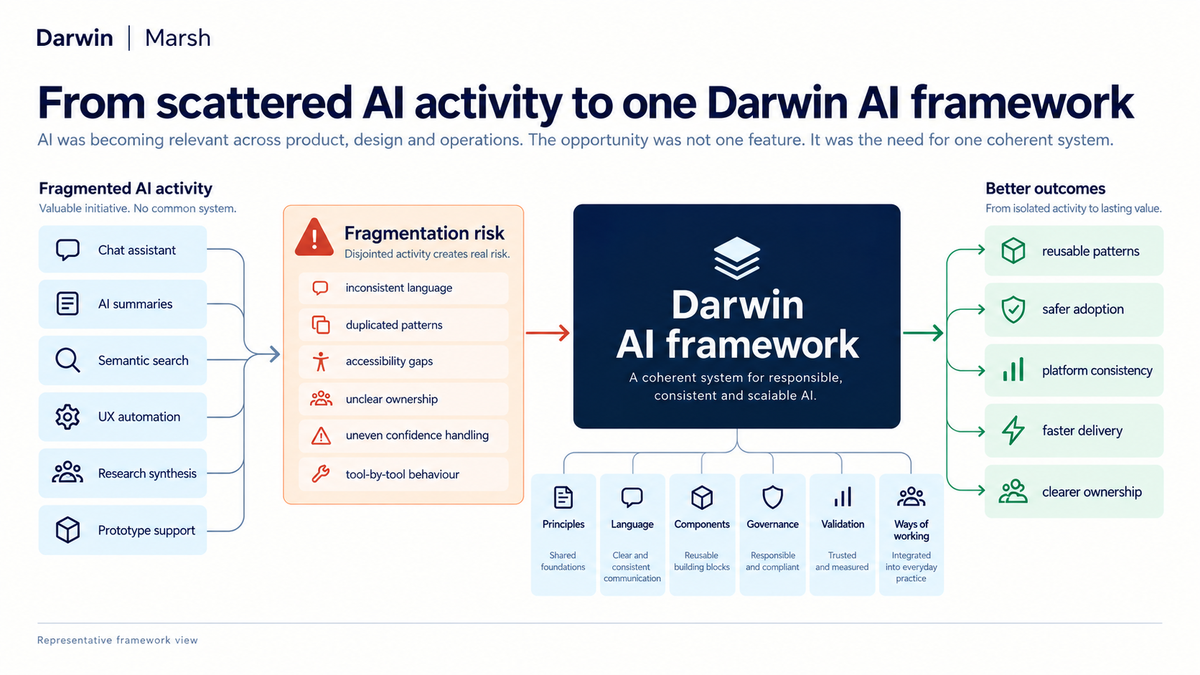
Teams could solve the same interaction and accessibility problems repeatedly.
AI confidence could cluster around a few individuals instead of becoming a shared capability.
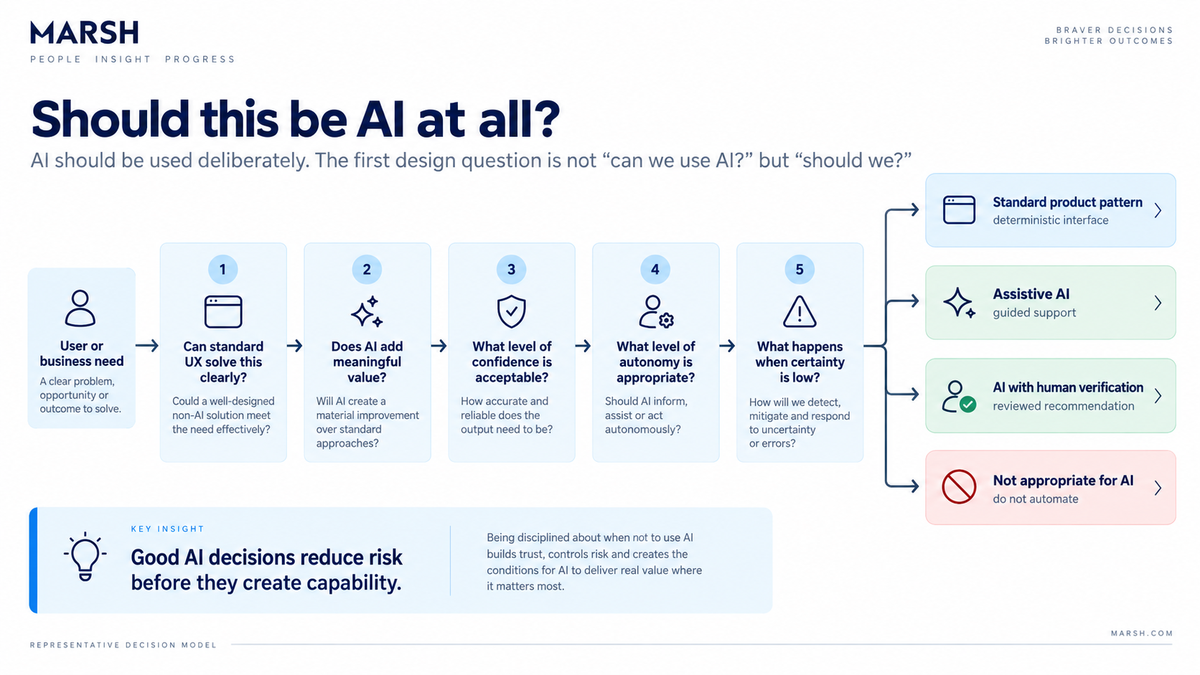
The first AI design decision was whether AI belonged at all.
A model introduces uncertainty, responsibility and failure modes that a deterministic pattern may avoid. The framework made suitability, consequence, autonomy and human verification design inputs before interface work began.
Match autonomy to consequence.
AI could inform, assist or act only when the impact, reversibility and review route supported that level of control.
Design uncertainty as a state.
Low confidence needed a visible explanation, a safe fallback and a route to verified information.
Build accessibility into the pattern.
Reading order, loading announcements, keyboard behaviour and recovery changed the component before handover.
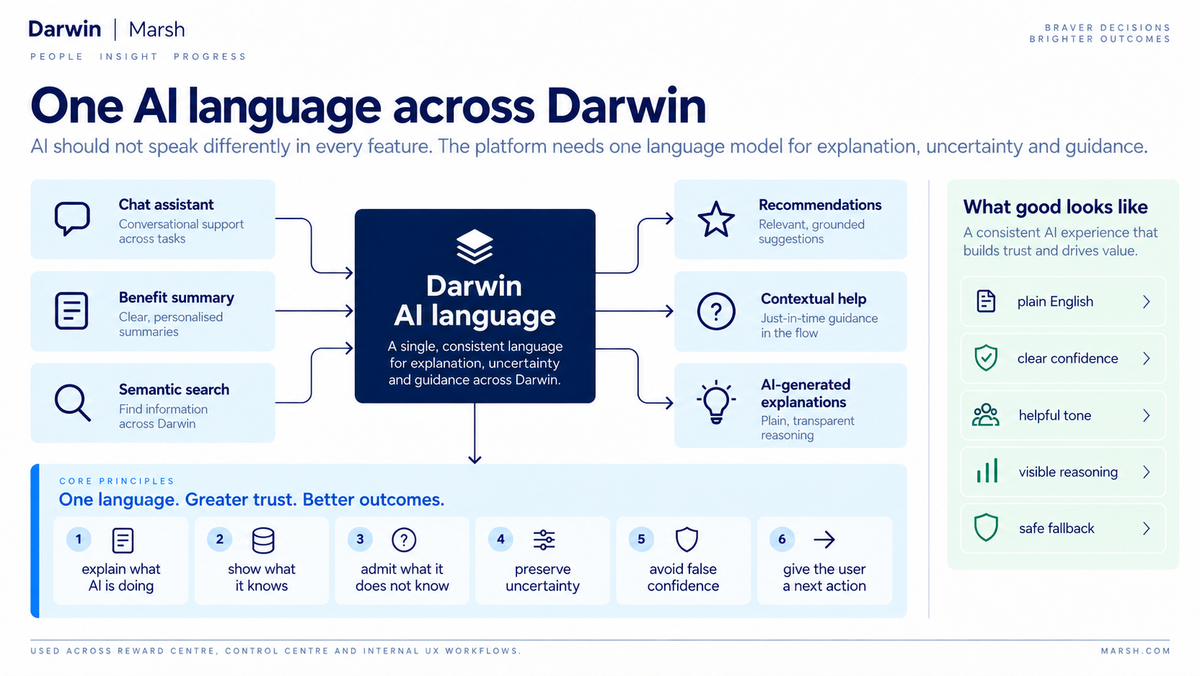
One AI language made separate product experiences feel accountable in the same way.
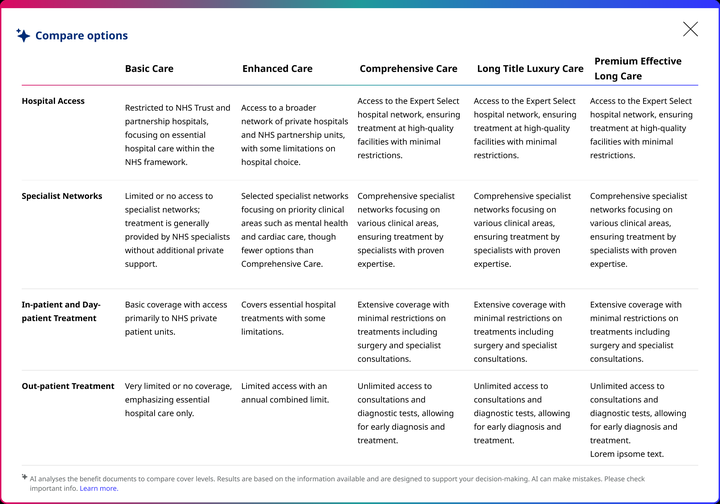
Chat, semantic search, summaries, explanations and recommendations needed a common contract: explain what AI is doing, show what it knows, admit what it does not and give the person a clear next action.
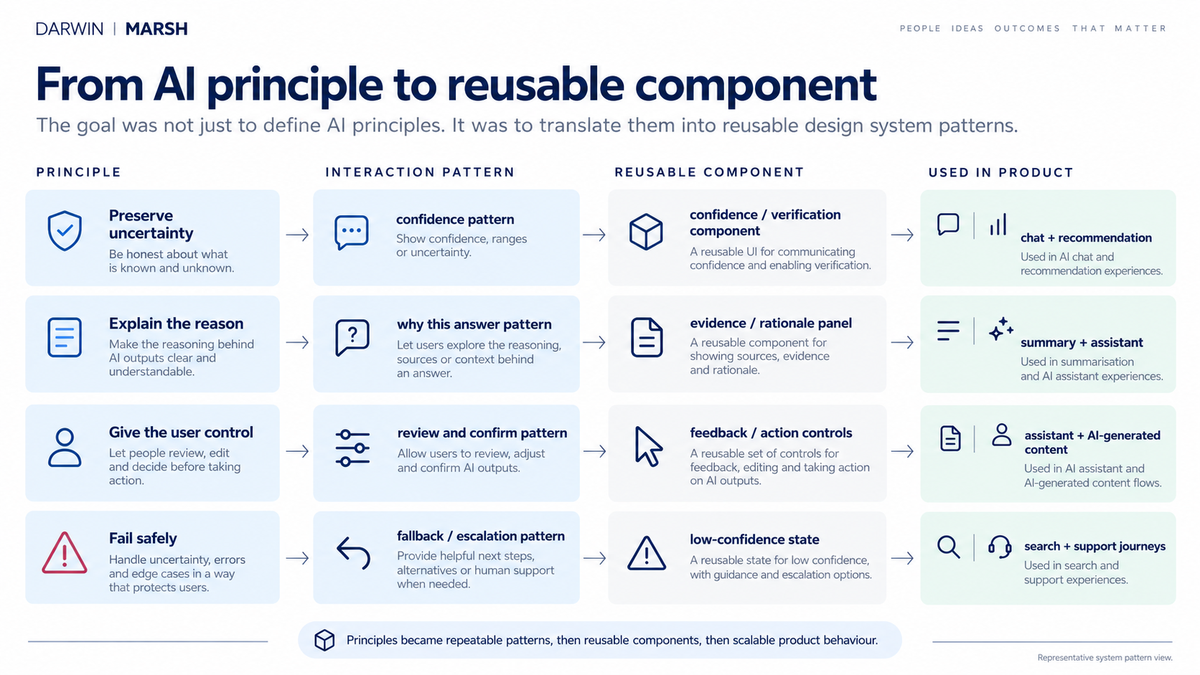
Principles only scaled when they became buildable components.
Language rules became confidence, rationale, verification, feedback and fallback patterns. Those patterns became reusable components, then moved into product work without reopening every decision.
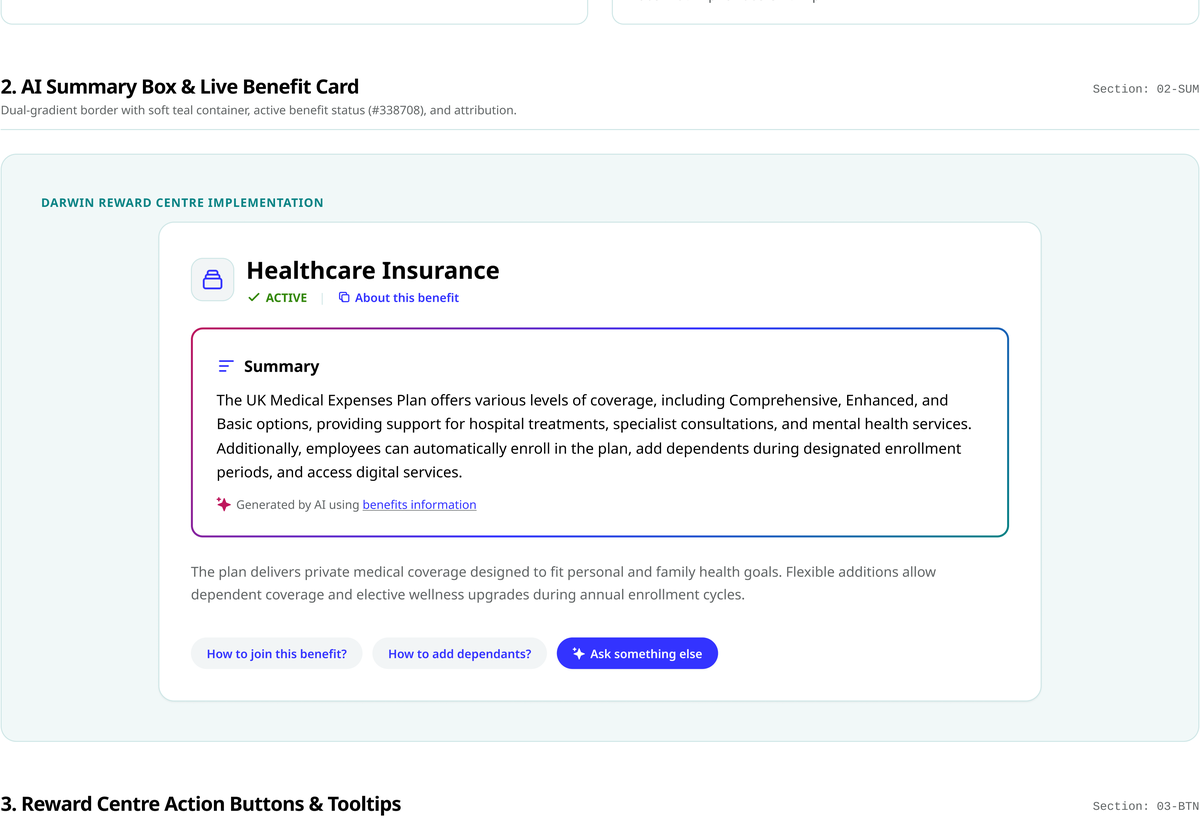
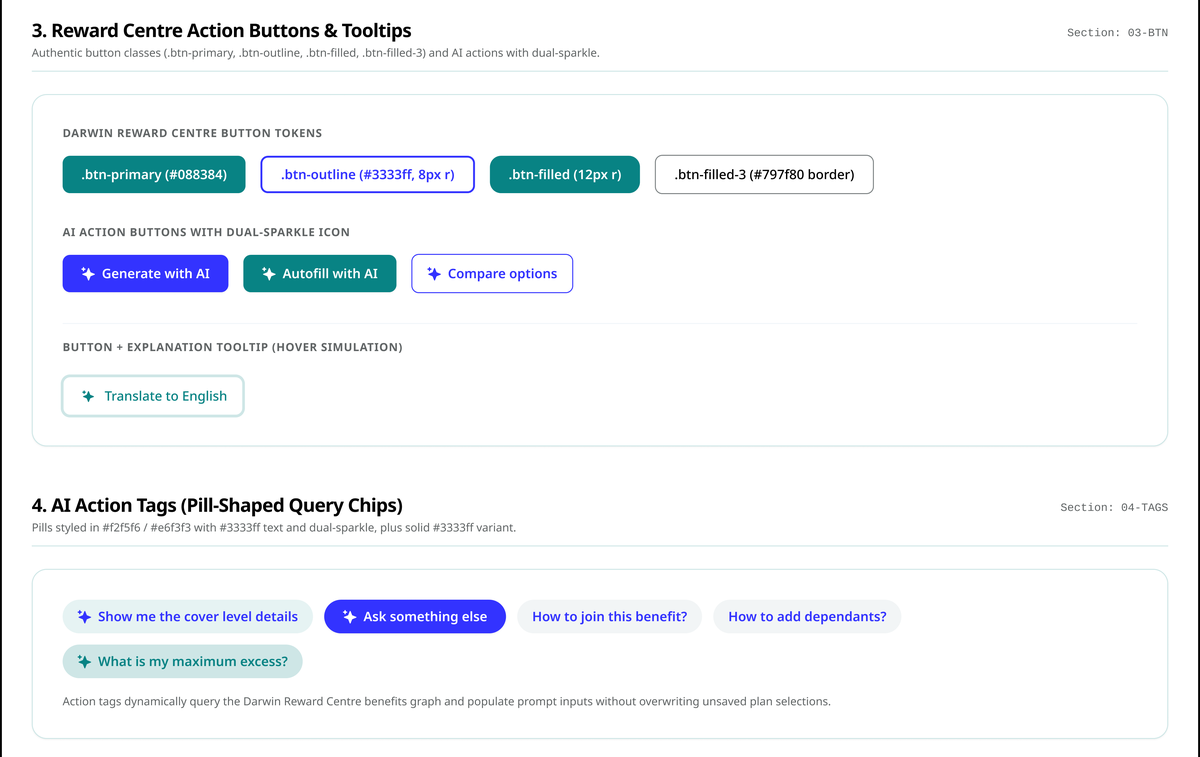
The framework had to survive real product moments, not just a standards document.
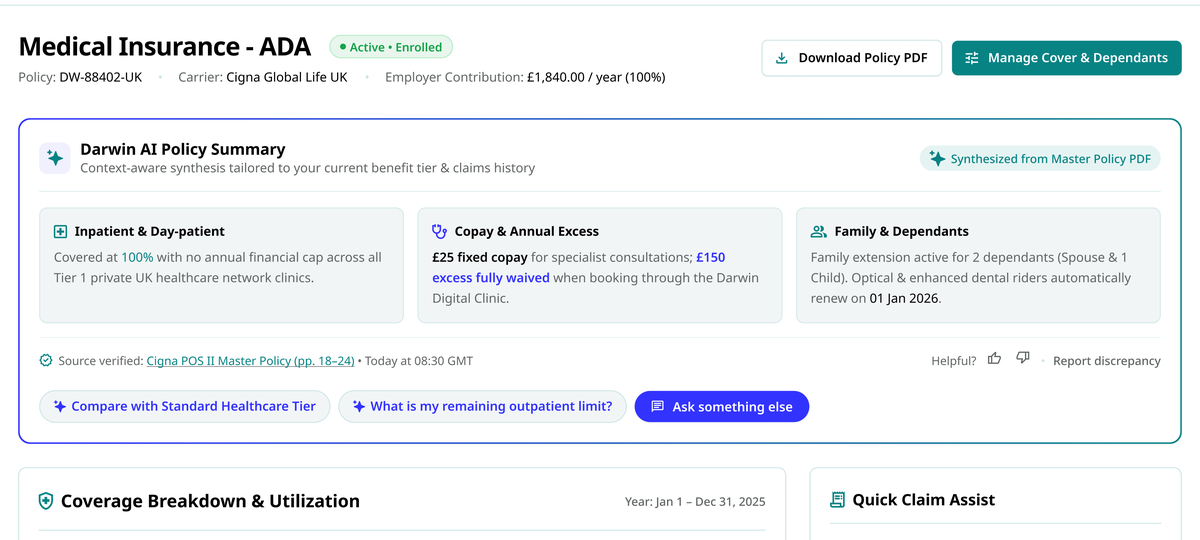
AI summaries, comparisons and assistants put the system under pressure. Each example needed to preserve the source task, show where generated content began and make uncertainty or escalation actionable.
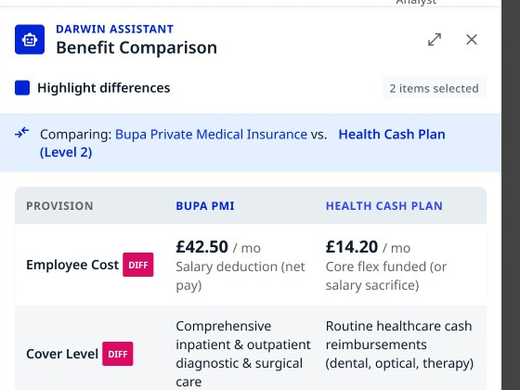
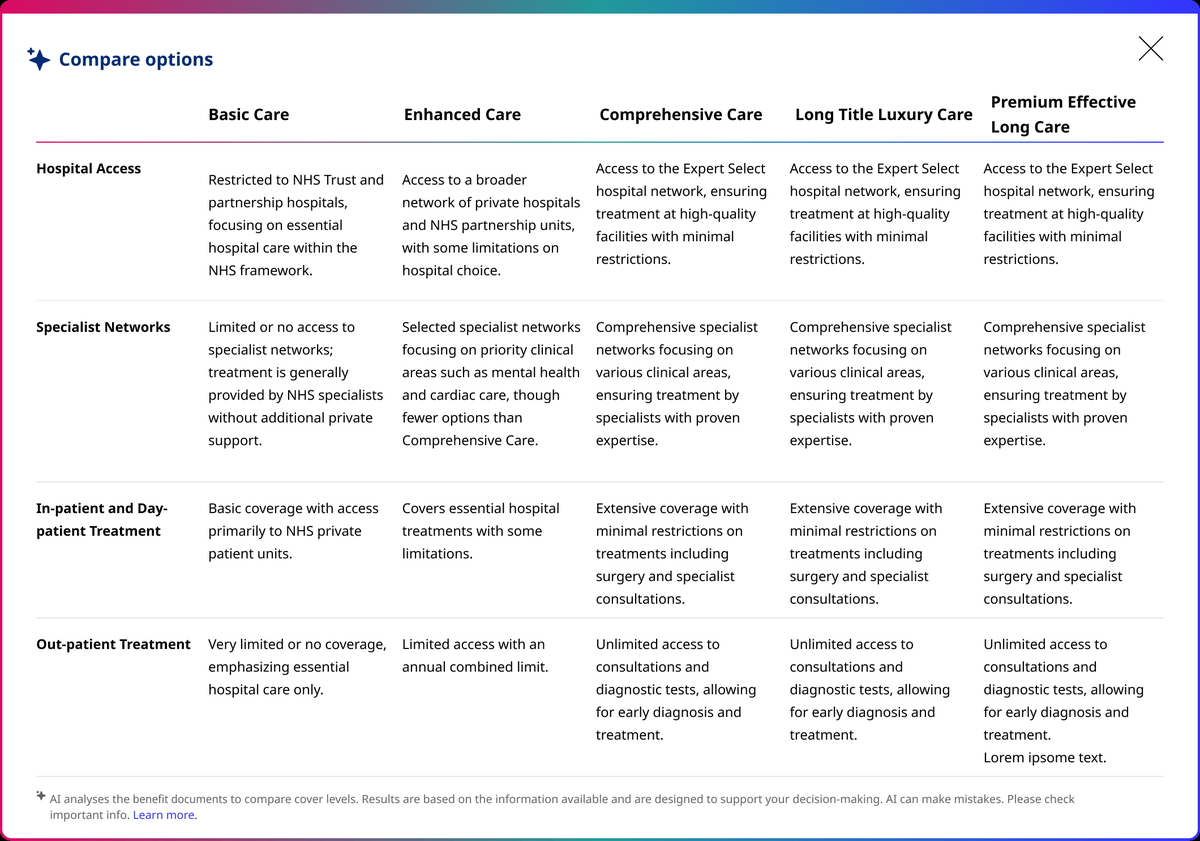
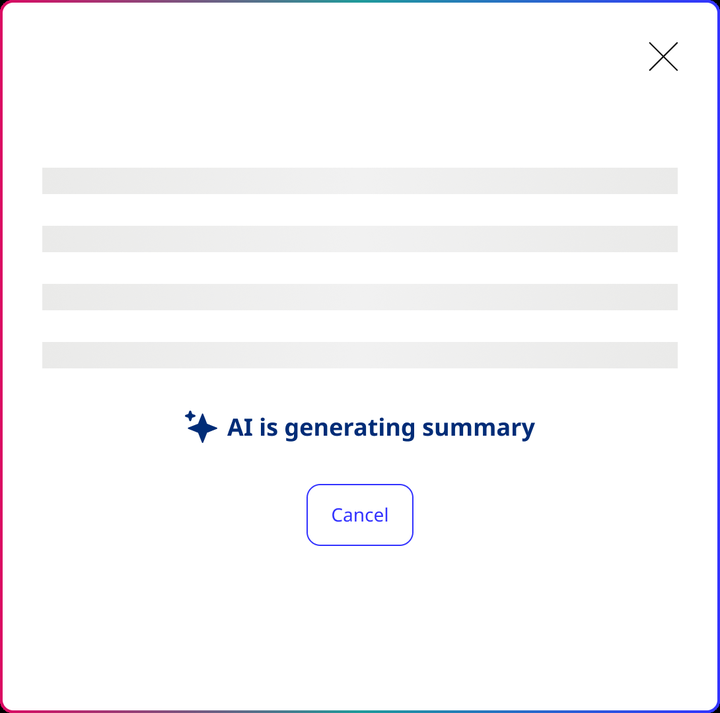
Loading, uncertainty and human takeover were part of the component contract.
A polished answer is only one state. The pattern also defined what the person hears while a result is generated, how low confidence is stated and which context follows them when a human needs to take over.
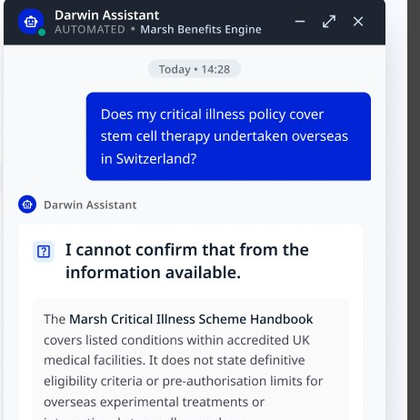
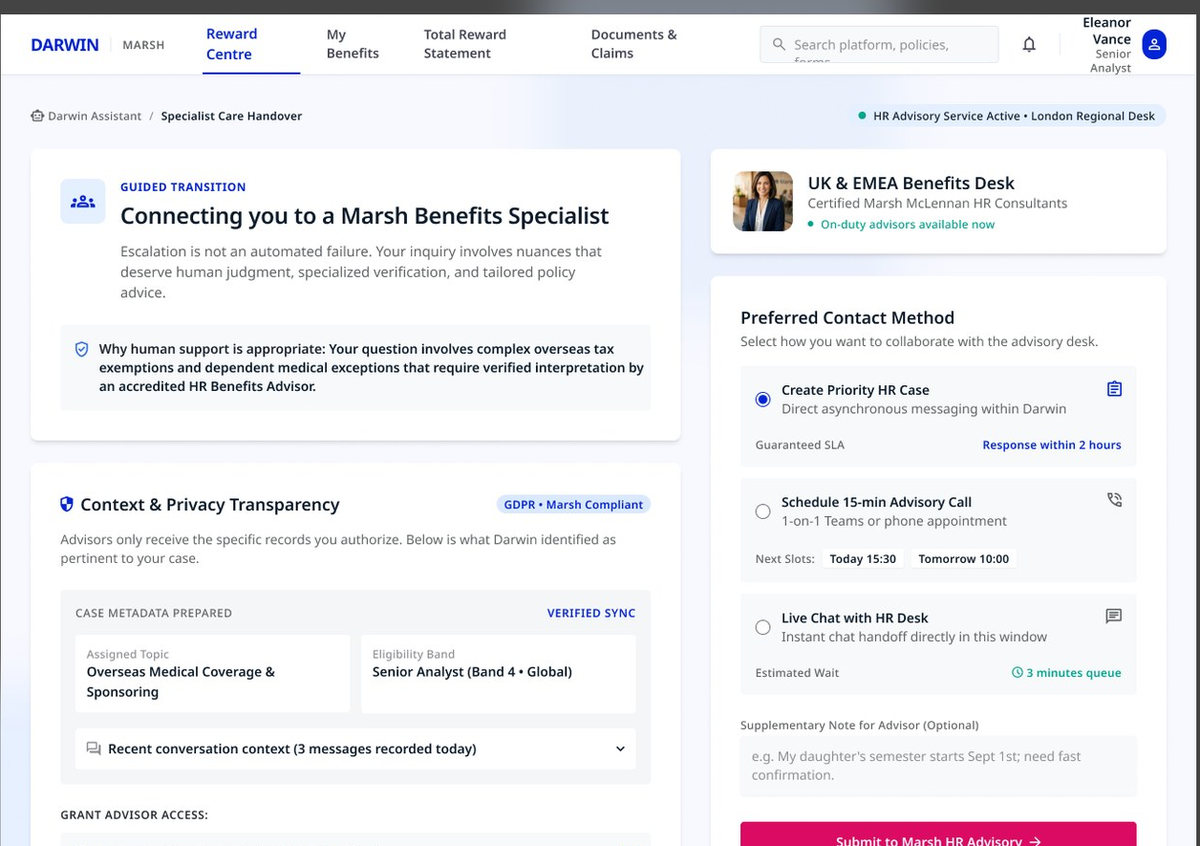
Escalation was designed as a transition, not an apology.
The handoff explained why judgement was needed, let the person control which context travelled and made ownership, response time and return routes explicit.
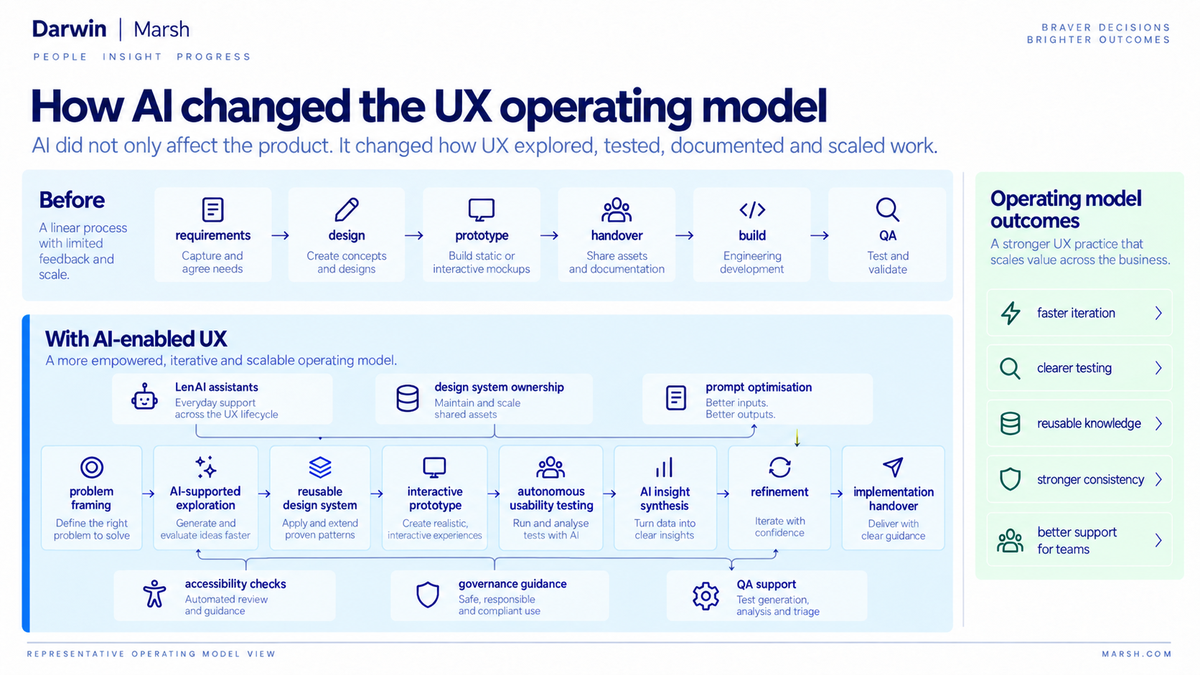
AI changed the product. It also changed how UX discovered, tested and delivered the work.
I helped designers move from occasional tool use towards practical, repeatable workflows. The aim was not adoption for its own sake; it was better judgement, richer prototypes and a team able to work confidently alongside AI-enabled engineering.
Find and synthesise evidence faster.
AI supported insight gathering, data analysis, usability-test synthesis, UX writing and copy exploration. Autonomous test runs accelerated feedback while designers remained accountable for interpretation.
Make difficult behaviour tangible earlier.
Prompt design, reusable assistants, agents and agentic workflows supported richer exploration. Vibe coding helped UX build interactive prototypes that could test states static frames concealed.
Make confidence a team capability.
I translated technical concepts into usable guidance, supported less-confident designers and connected new tools to accessibility, ownership and repeatable quality checks.
The outcome was a capability that could travel further than one feature or one designer.
The framework connected customer-facing uses, system foundations and team enablement. It gave Darwin a route from principle to product implementation, then back into shared learning.
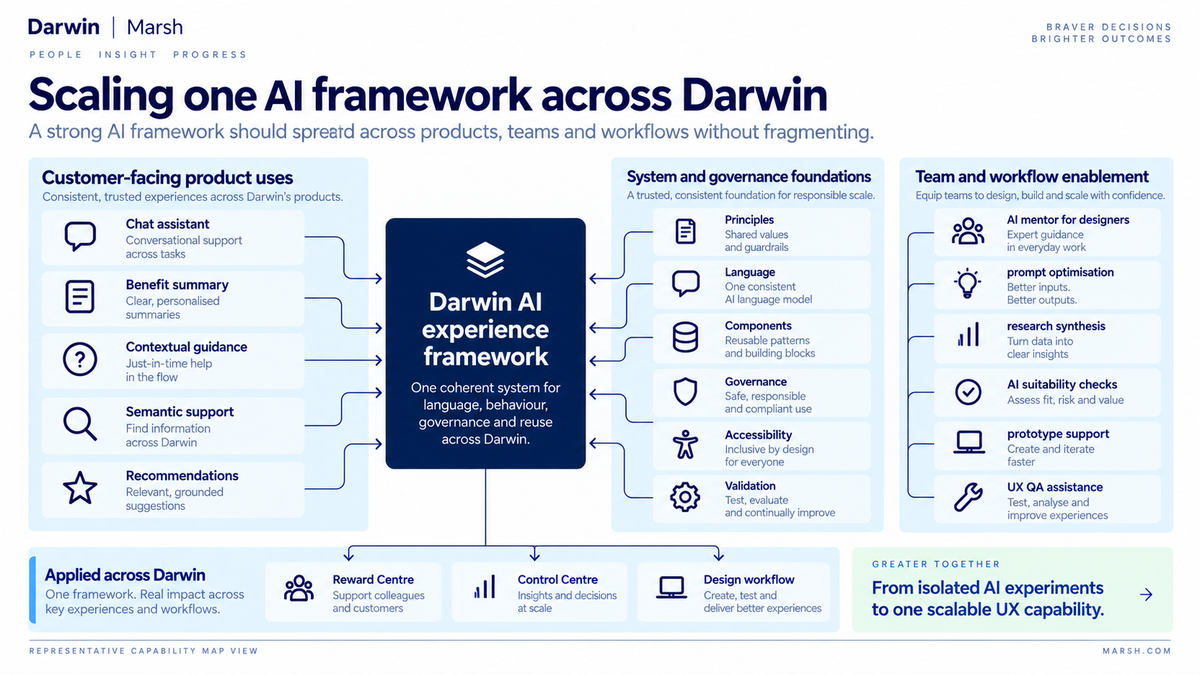
A consistent experience language for summaries, search, recommendations, assistants and generated explanations.
Reusable interaction patterns and components carrying confidence, sources, fallback and accessibility into delivery.
Practical workflows, prompting guidance, assistants, prototypes and research support that helped more designers work confidently with AI.
The work was not simply to design an AI feature.
It was to build the design capability required for AI to scale across an enterprise product organisation.